
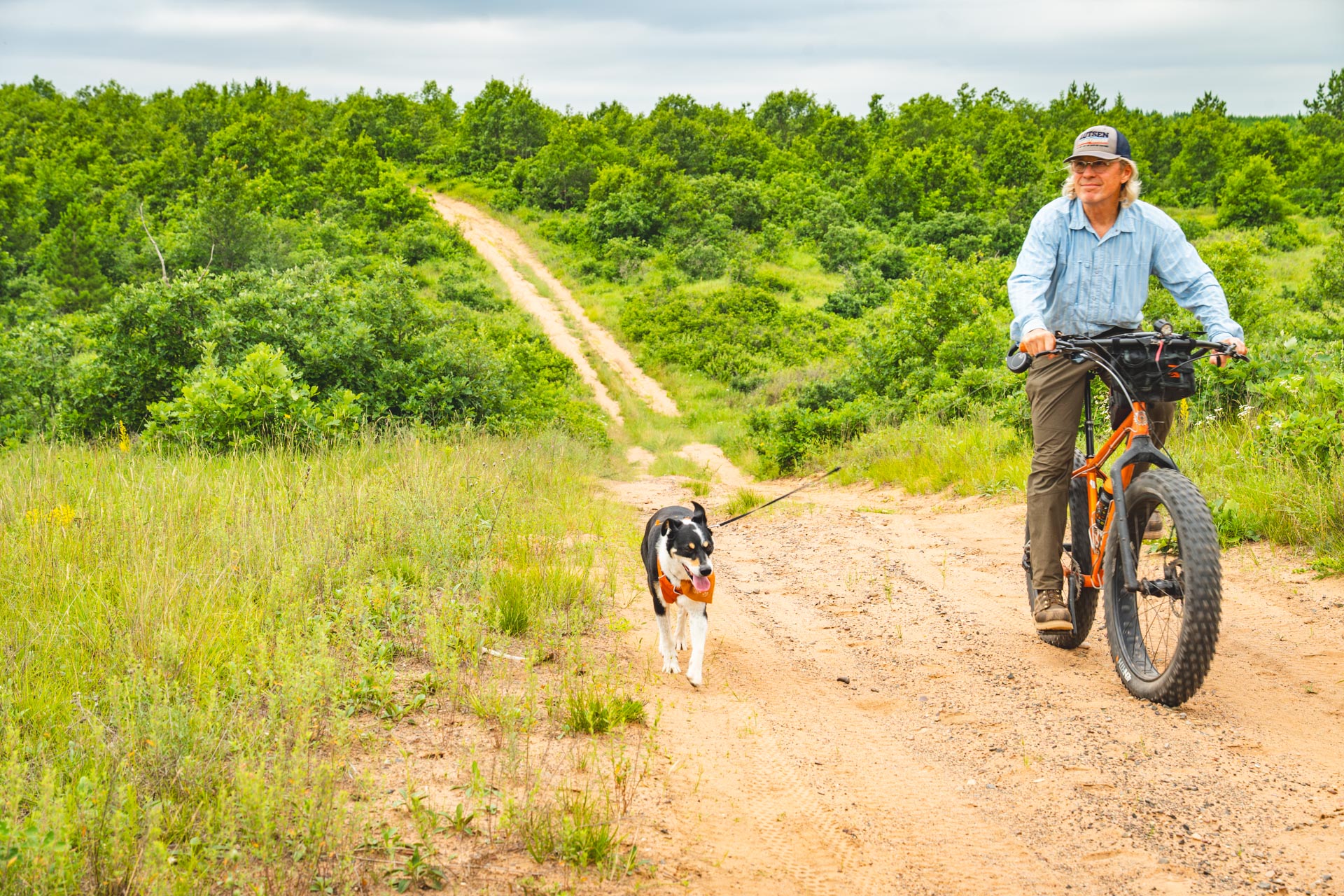
It is officially berry season here in the Wisconsin Northwoods. Wild juneberries, raspberries, dewberries and blueberries can be found on almost any ride. Whether you are pedaling on singletrack through the forest or along the sandy trails in the barrens of Bayfield Peninsula, you can leave the shot blocks at home and stop to forage for fuel along your ride. While you can get around the barrens on a 2″ plus tire, some of the roads and trails are deep sugar sand, like a beach past the waterline. A fat bike makes for an ideal mode of transportation to get around and look for berry patches.
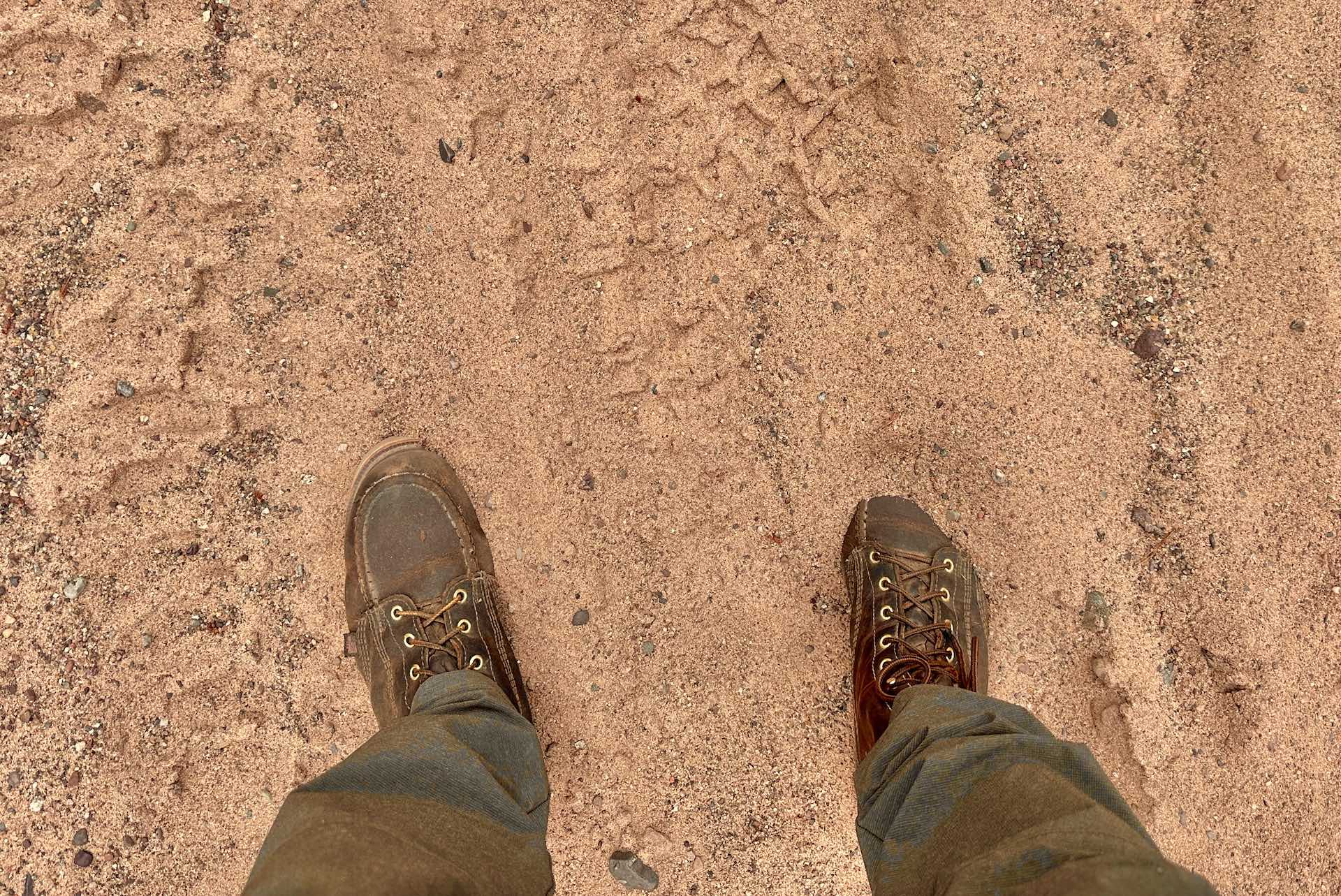
Lately, Cowboy and I have been taking our Milwaukee Bicycle Company Buck Shot fat bike and exploring the berry patches north of us in the Moquah Barrens in Bayfield County and the Sharp Tail Barrens near Solon Springs in Douglas County. The roads and trails are very sandy because the soil is glacial outwash, 12,000-year-old sediment left behind by receding glaciers. The other component is a former spillway of Glacial Lake Duluth (which preceded Lake Superior) and its associated terraces.
All this ice age activity formed a large outwash plain dotted with rolling hills covered by pine trees and depressions that formed “kettle lakes,” which make the area great for swimming. That is why I created the Valhalla Beach party route in the area. I talked about that route and shared a nice video about it in a Wallpaper Wednesday post back in April when I was then dreaming of summer rides like this.
Sven and I have been talking about putting on a summer fat bike race weekend in the area because the sand, rolling hills and endless trails make for great riding. There used to be a sandy fat bike race kind of nearby the area called Fatfish Forty. Gomez wrote this race report about it in 2021.
In addition to the great sandy riding and swimming opportunities, the area is thick with berry patches and brambles.
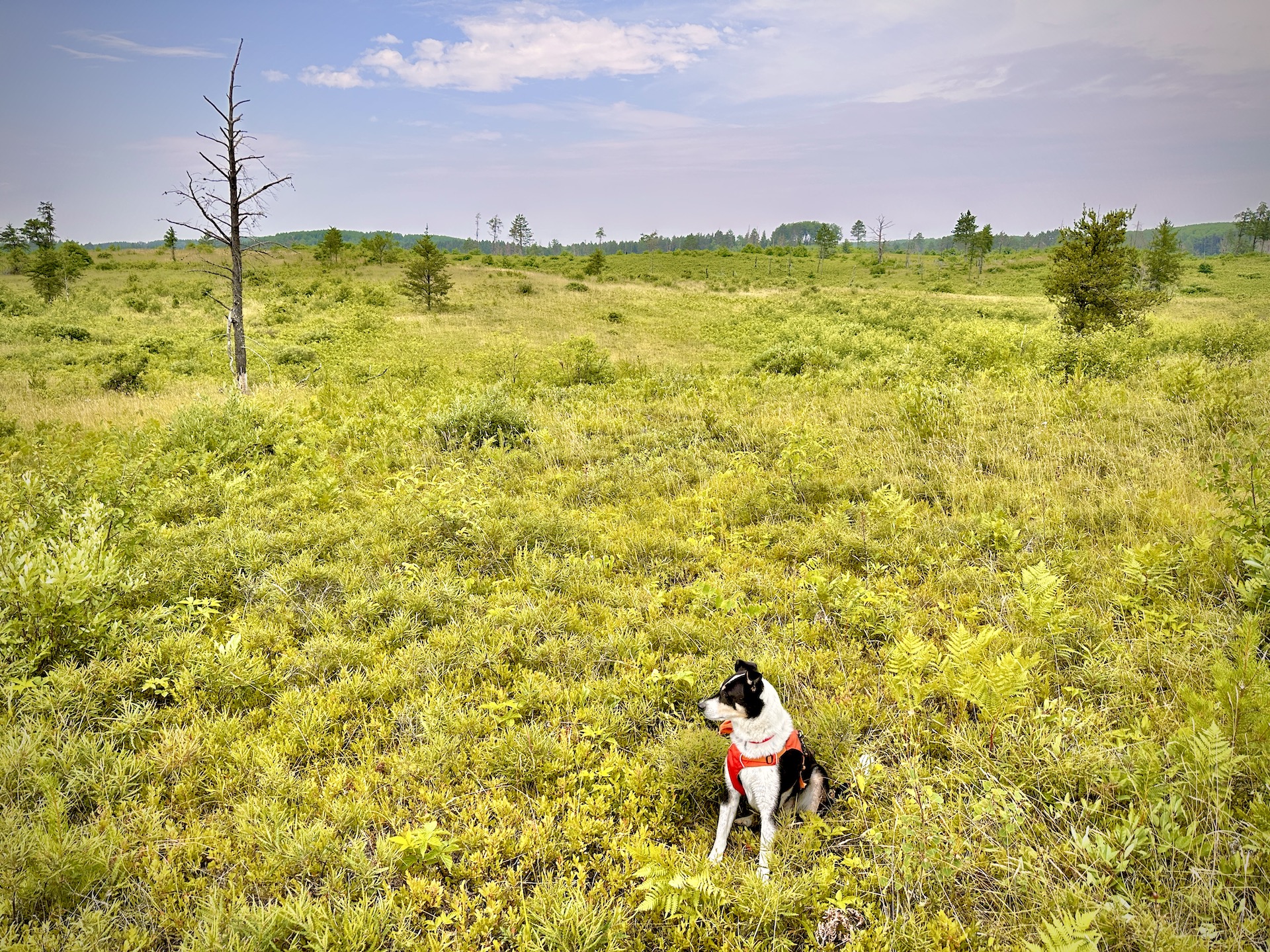
Picking wild blueberries is the most time-consuming of all the berries. They are small and grow so close to the ground, so I rarely get more than two or three in a single pick. Cowboy comes with me on almost all my adventures, and he has learned to pick berries too. He can easily harvest raspberries, blackberries and the bigger dewberries from bushes at his eye level. For him to pick blueberries, though, he has to lie down and nuzzle around.
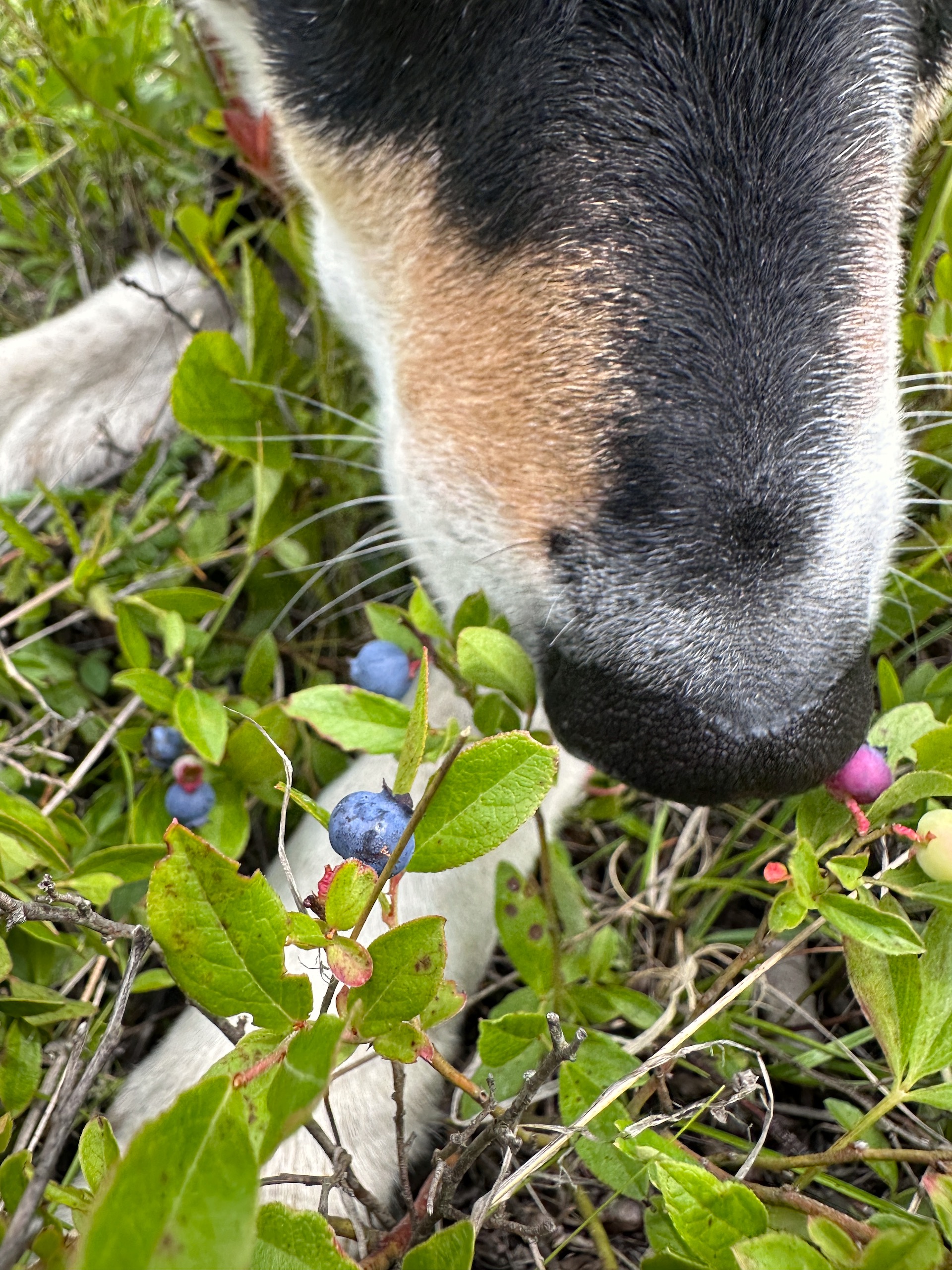
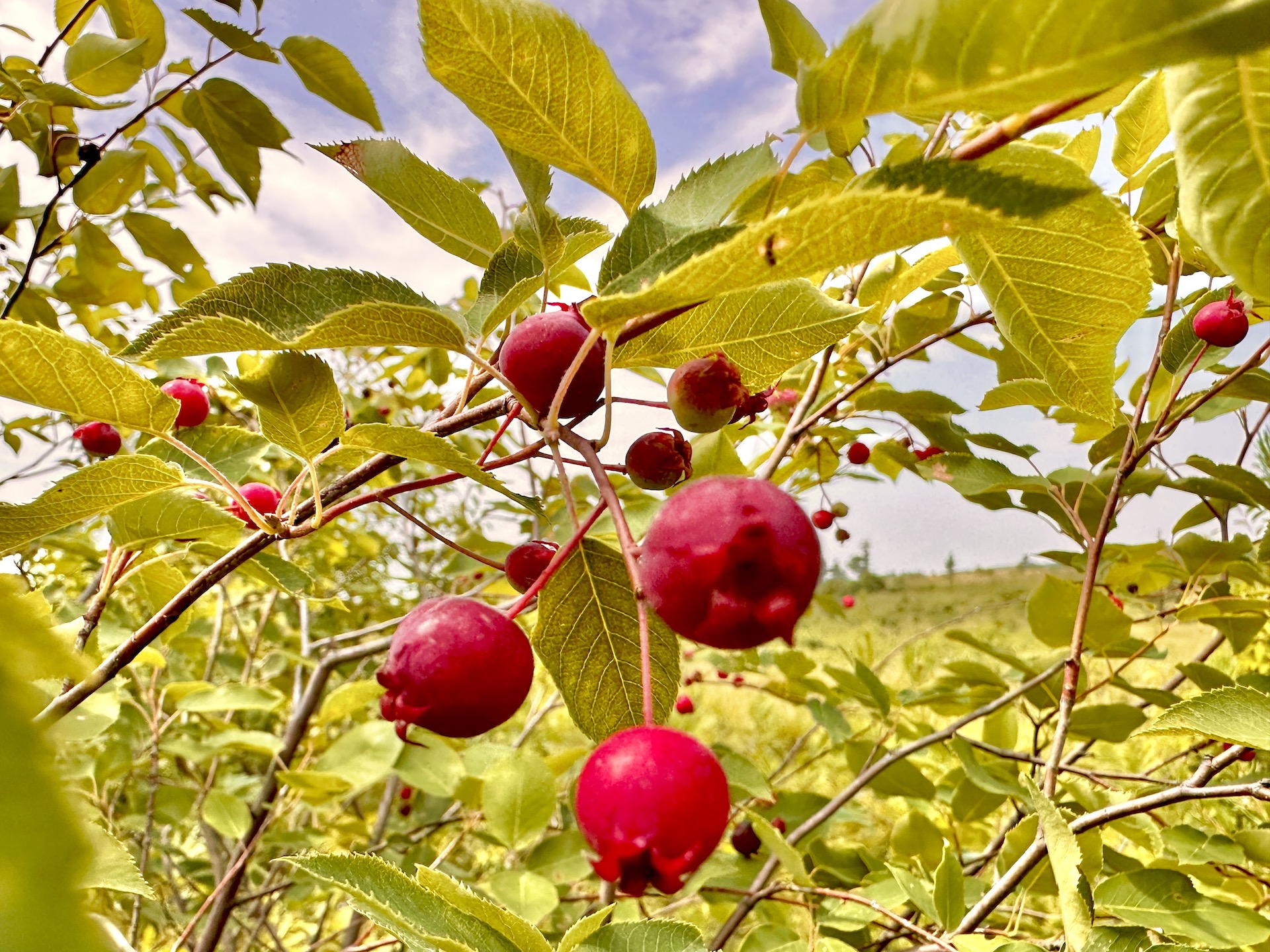
Picking blueberries is challenging enough that Cowboy gets bored with it pretty quickly and starts to wander or look for shade on hot days like the last couple we experienced riding and foraging in the sand barrens of Bayfield County. Shade is hard to come by in the barrens, where scrub oak only grows three or four feet tall, and serviceberry or Shad Bush are thinner and not much taller.
This summer harvest is all part of nature’s generous gift economy. I still sometimes feel guilty when I think about how nature just gives and gives. If a friend gave me a gift, I would want to repay that generosity at some point, at the very least with gratitude and kindness. While I am grateful for what Mother Nature provides, I’m not sure she hears me when I express it.
Thanks to that gift economy, between now and fall, I am generally able to forage for enough berries to freeze and can, so that they will last me until this time next year, when I can once again start picking.
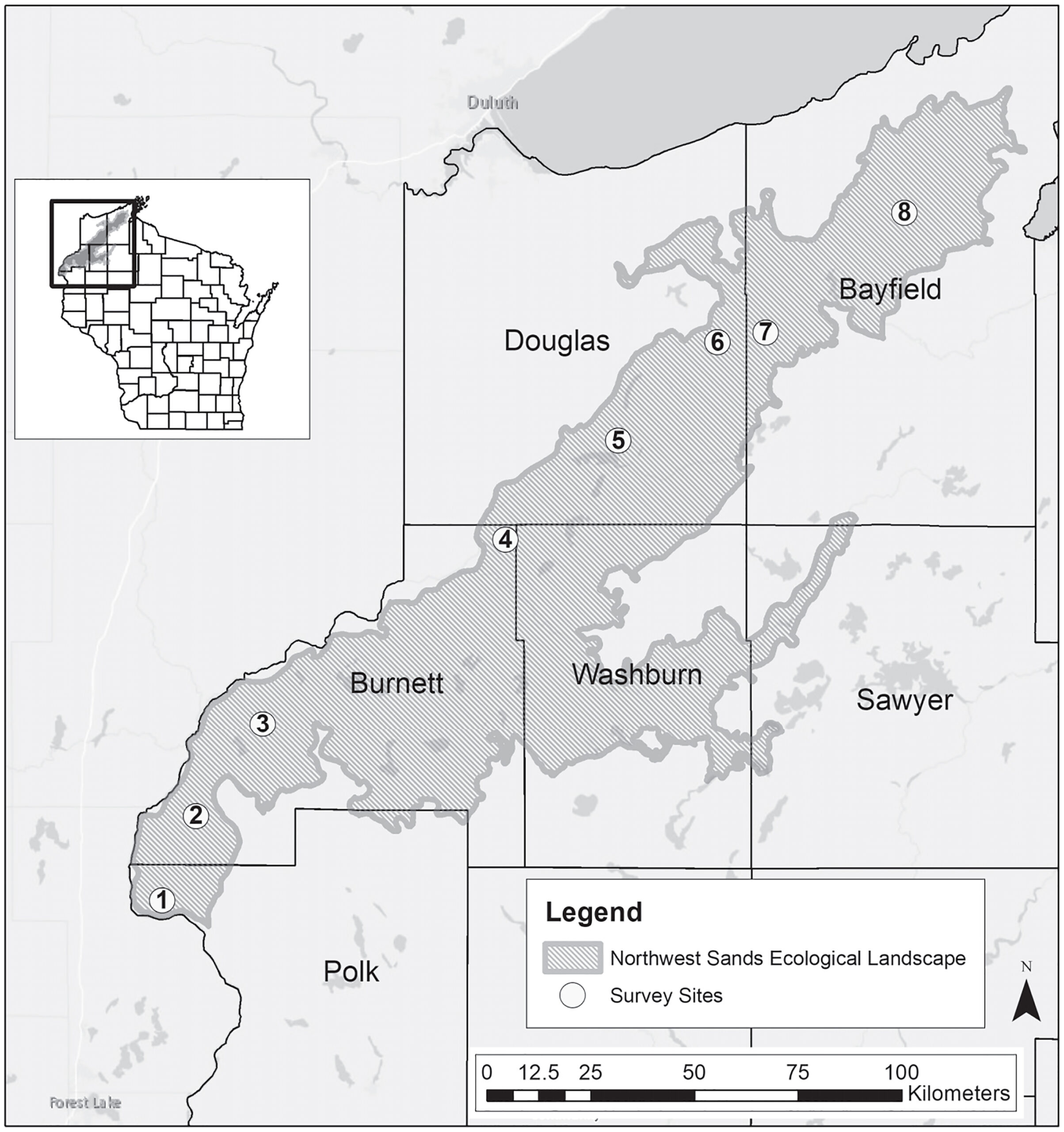
The 1.2 million acres or so of pine barrens that stretch from the Bayfield Peninsula down to the tip of Polk County are a rare and beautiful, ecosystem. The Northwest Sands is the best place in Wisconsin and, arguably, the planet to manage for the globally rare Pine Barrens community, part of the Northwest Sands Ecological Landscape. Another example of nature’s geologic wonders left over from the ice age that make the area great for riding.
It is pretty fragile, so it needs to be managed carefully for timber harvests, roads and trails. Management is fairly straightforward, though, since almost half of the 1.25 million acres is public.
New Jersey has a large Pine Barrens area as well, but it is more populated. With only 21 people per square mile, and most of them living close together in towns, the area feels like a wilderness and makes great habitat for wildlife and wildflowers.
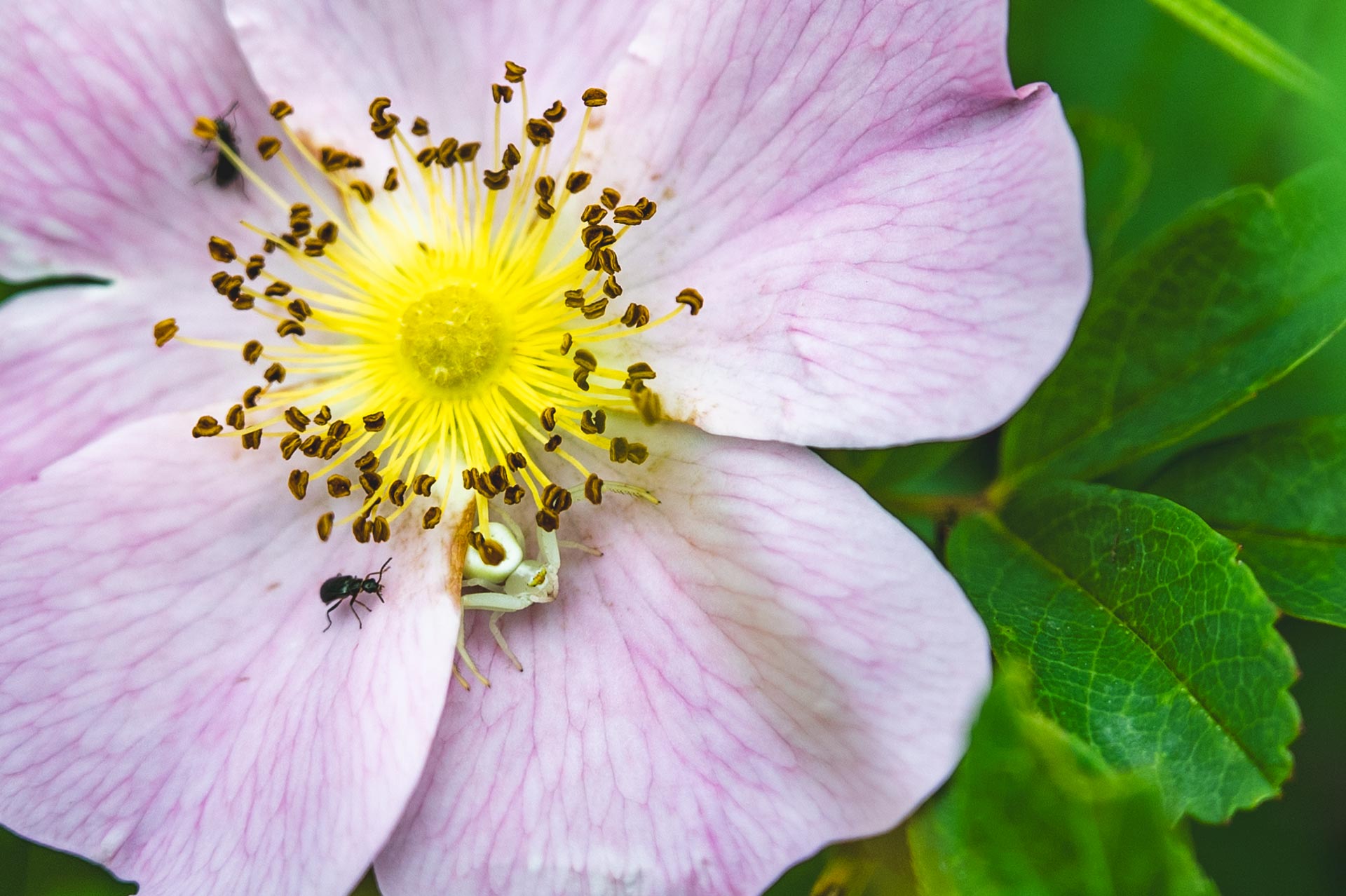
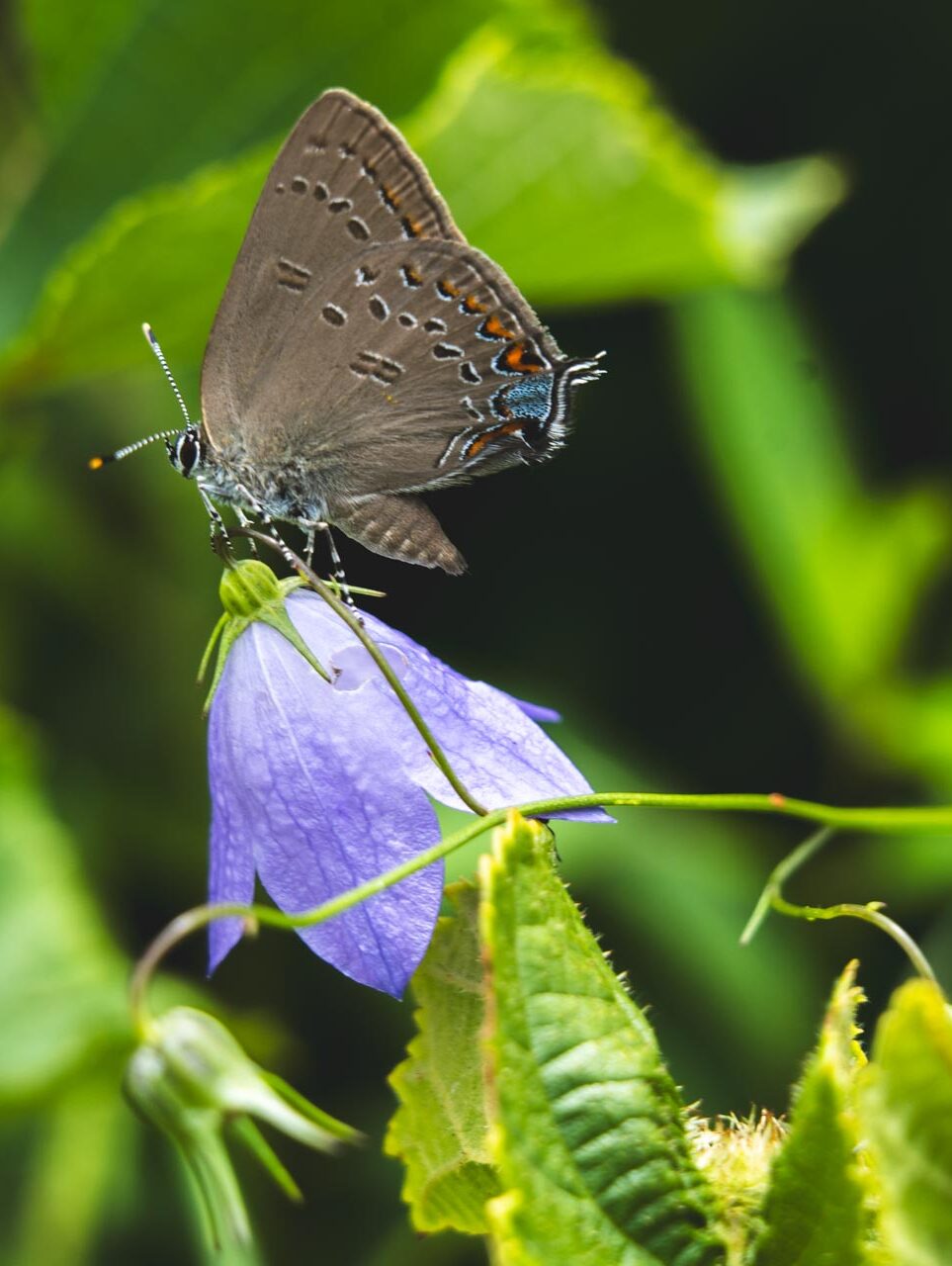
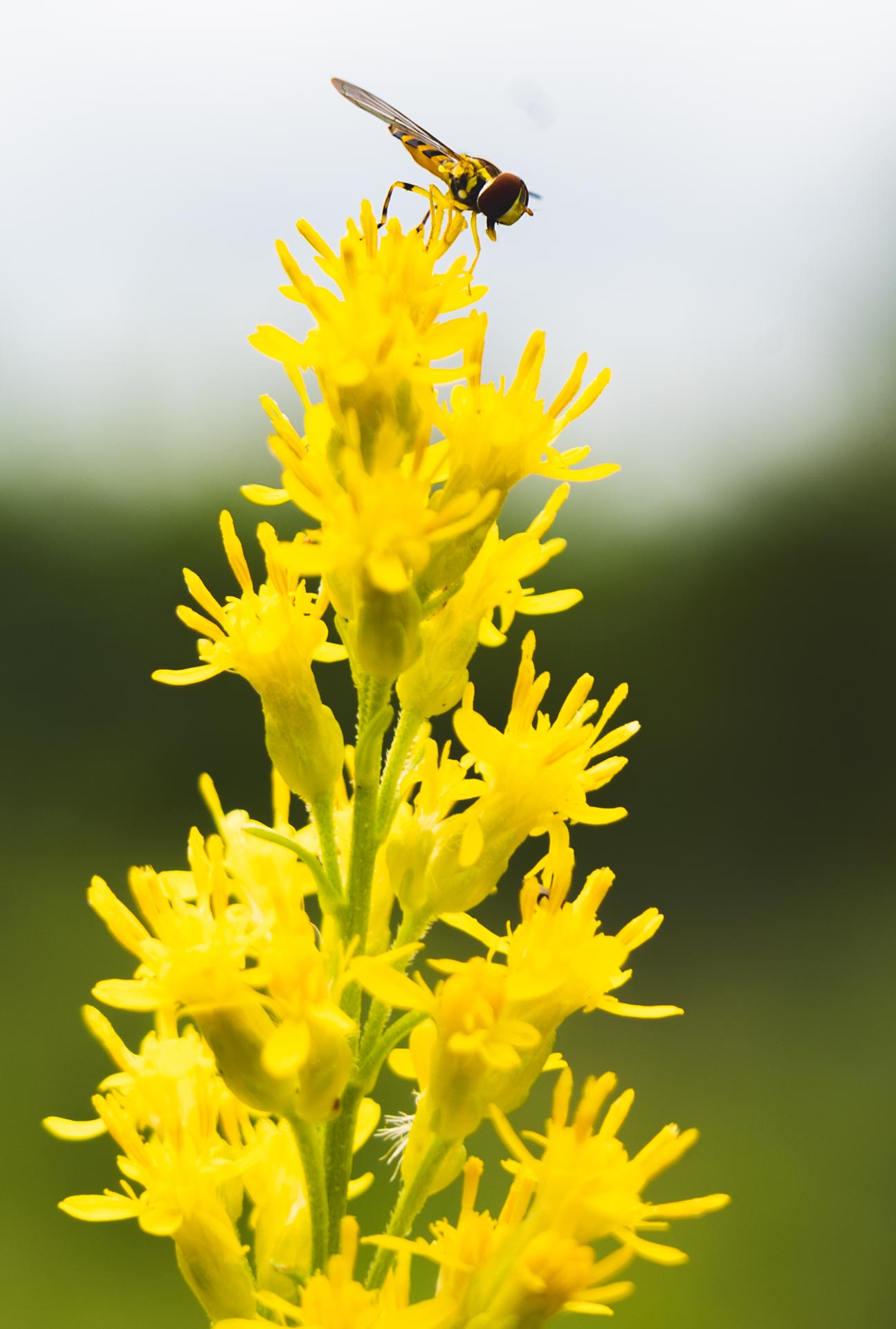
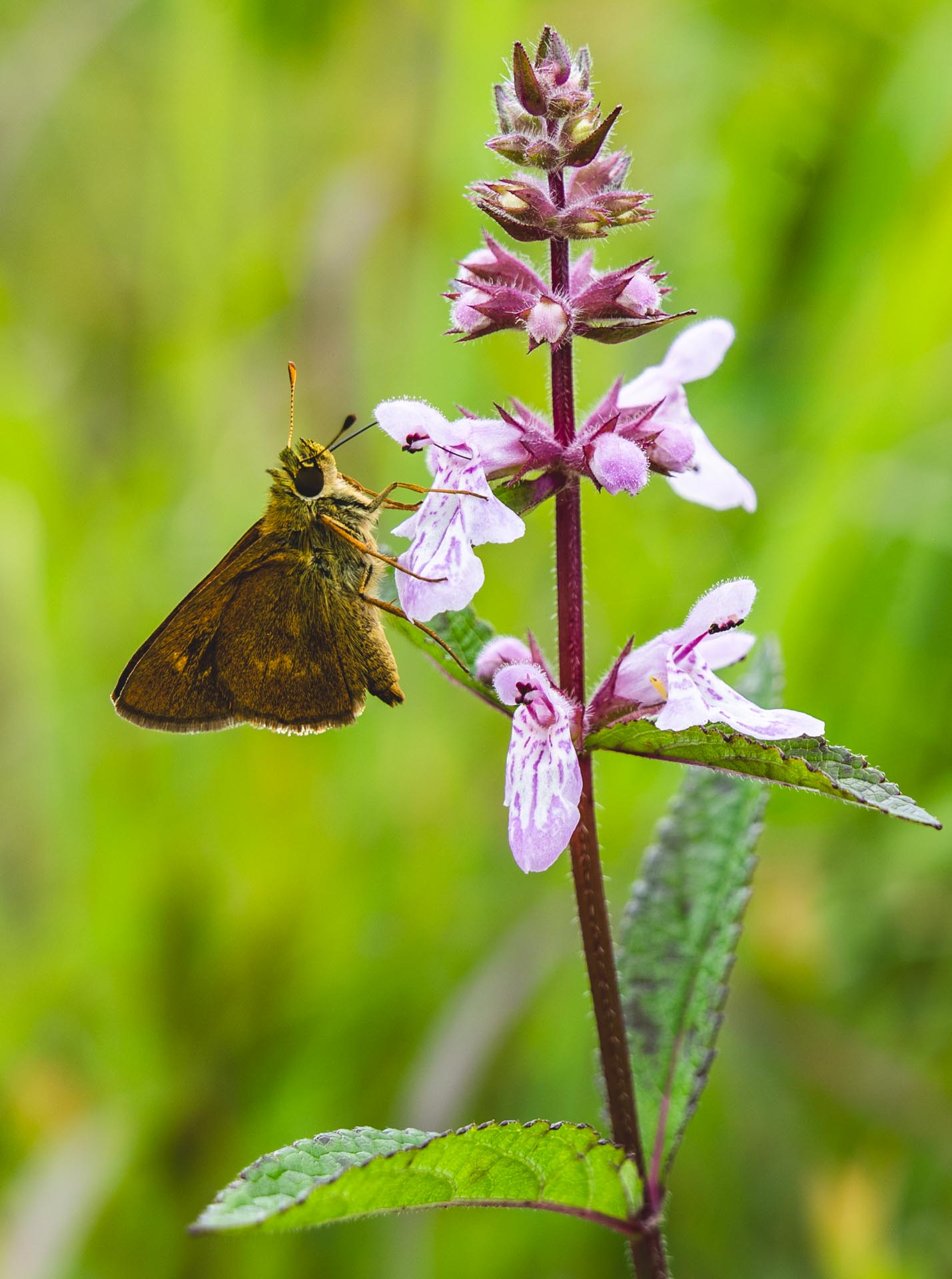
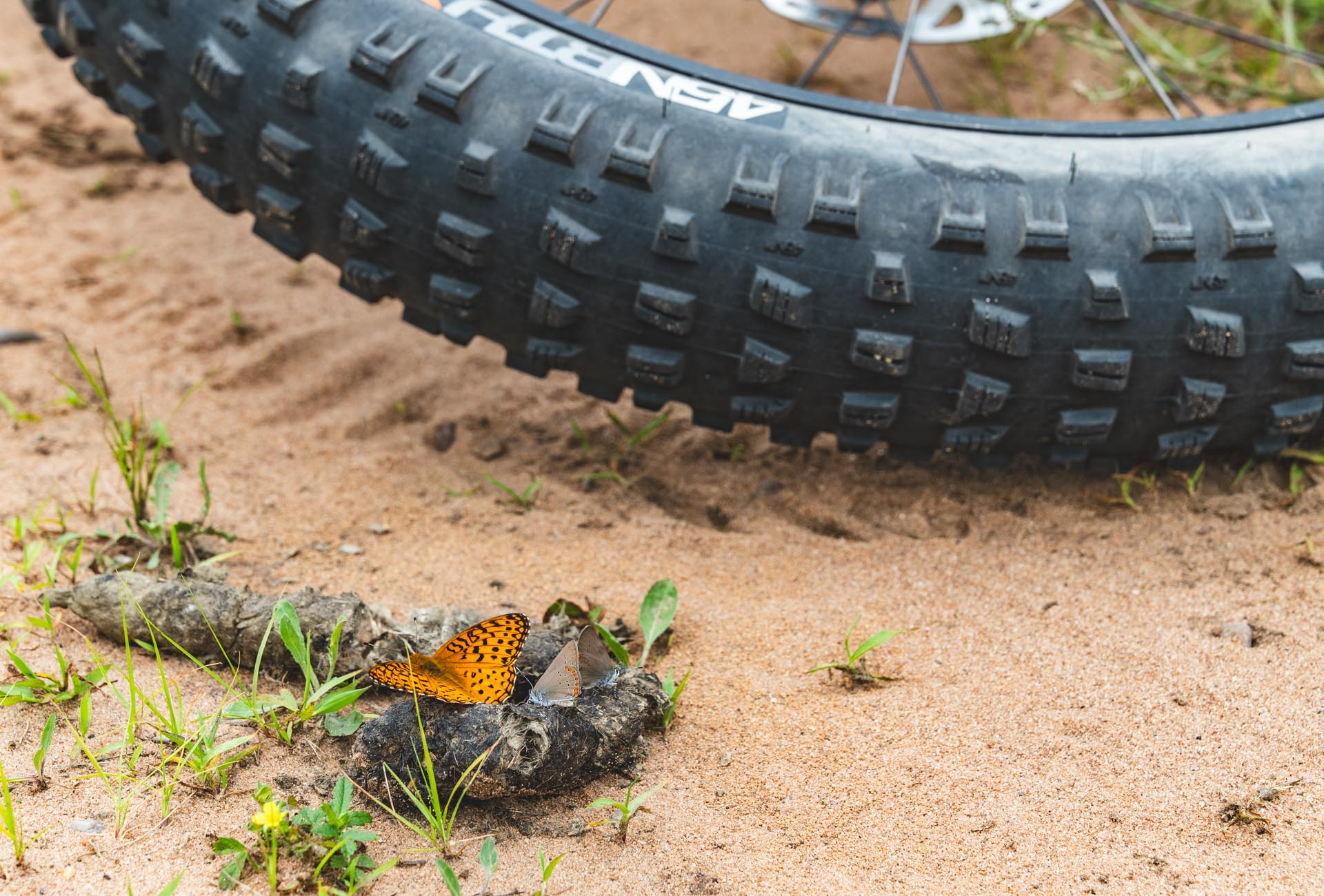
I am still learning about the area, its flora and fauna. I’m not good with insects, so Seeley area nature photographer Paul Ostrum helped with the IDs above. If anyone wants to identify the other bugs in my photos above, please comment below. I’ll be riding out west for the next couple weeks riding in Colorado and supporting a couple of friends racing Leadville.
I can’t bring a fat bike due to limited rack space and race bikes getting preference. So if you have a cool summer fat bike photo, email it to us for Wallpaper!
Got your own Wallpaper Worthy Photo?
We’d like to feature fatbikes from around the world!
If you’ve got a nice fat-bike-related image that you feel is “Wallpaper Worthy”, slap it in an email with what, where, why info as well as photographer’s credit to [email protected] and you may see your creative work here! Must be a horizontal (16:9 ideal or croppable to that aspect ratio), quality screen resolution (72 dpi or higher) main image to preserve image quality! Feel free to include a supporting image or two for the story body.
Book Rec: The Serviceberry https://www.robinwallkimmerer.com/books.
Yes Liz, I was gonna get more into that whole gift economy concept, but it was a bit too far astray from fat biking. Maybe a future topic for the Northwoods Ramble if I ever get that podcast going again…
Cool pic of the Hoverfly on the goldenrod! Yeha, I had to look that up!!
Hey Dave, yeah, I am learning all this stuff new since I moved to the Northwoods. I used to feel like someone could blindfold me and drop me in any alley in Milwaukee and I could tell you where I was, who the alder is, and where the closest bike shop was without walking more than 100 yards. Now when I am out in the forest, I feel like I am in the middle of a plaza in a foreign country where everyone is talking around me, but I don’t understand anything. The trees, are communicating, I just can’t hear them!