
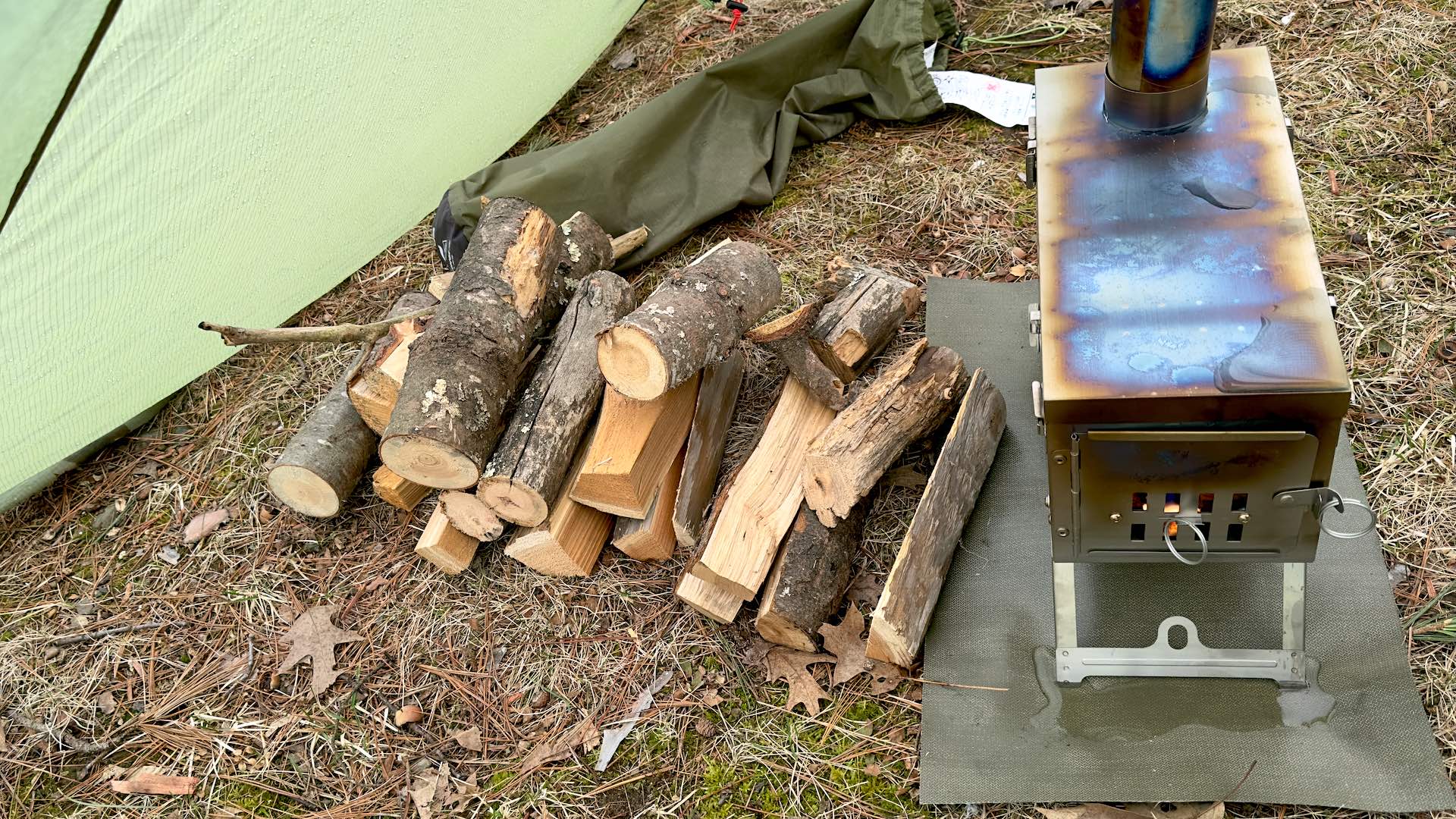
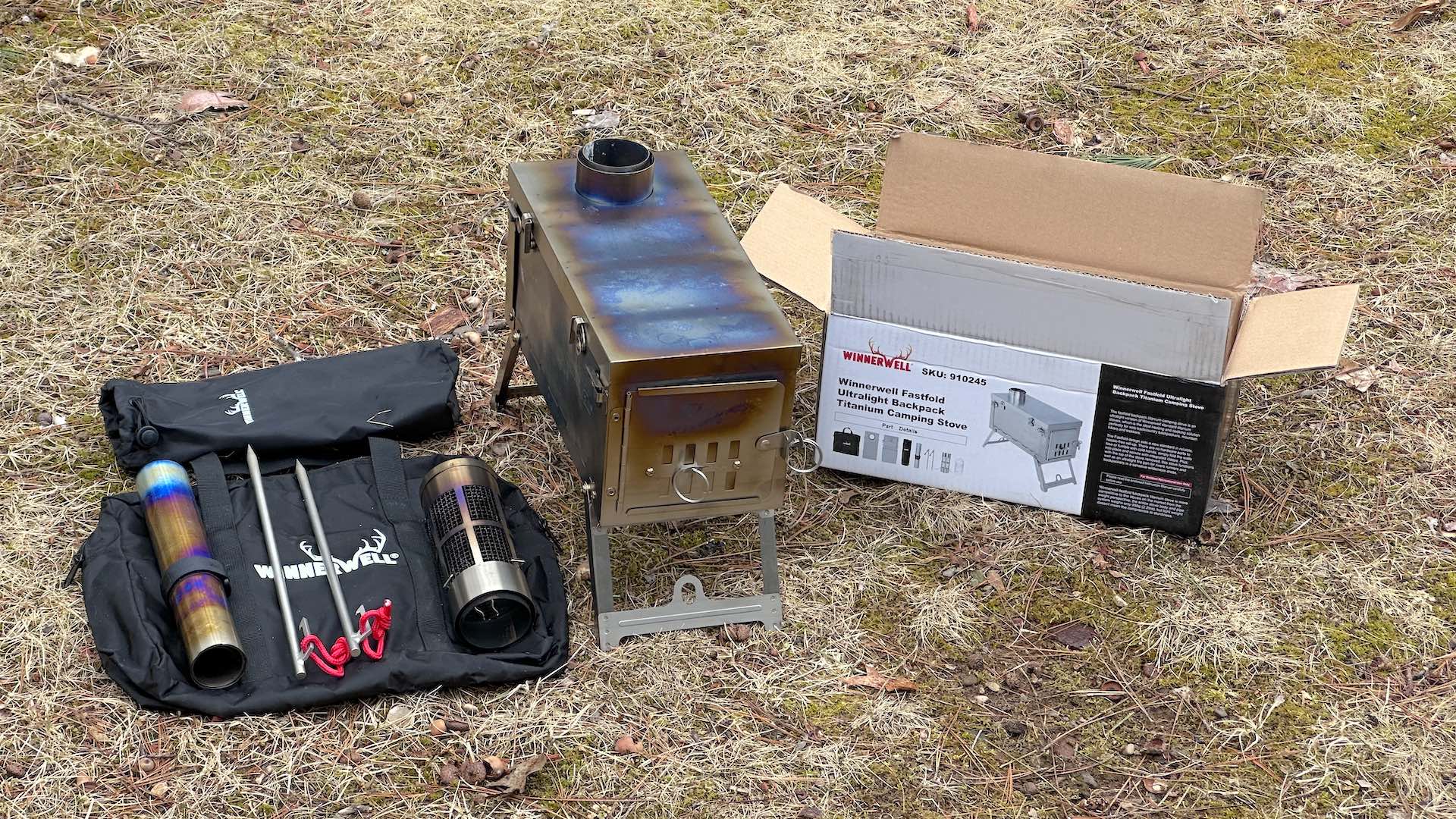
I must have jinxed myself when I scooped up the last Winnerwell Fastfold Ultralight Titanium Wood Stove in the United States. As soon as it arrived, the forecasted low temperatures never dropped much below freezing. It is hardly worth hauling a hot tent and wood stove out bikepacking if I only need a 30°F quilt to camp.
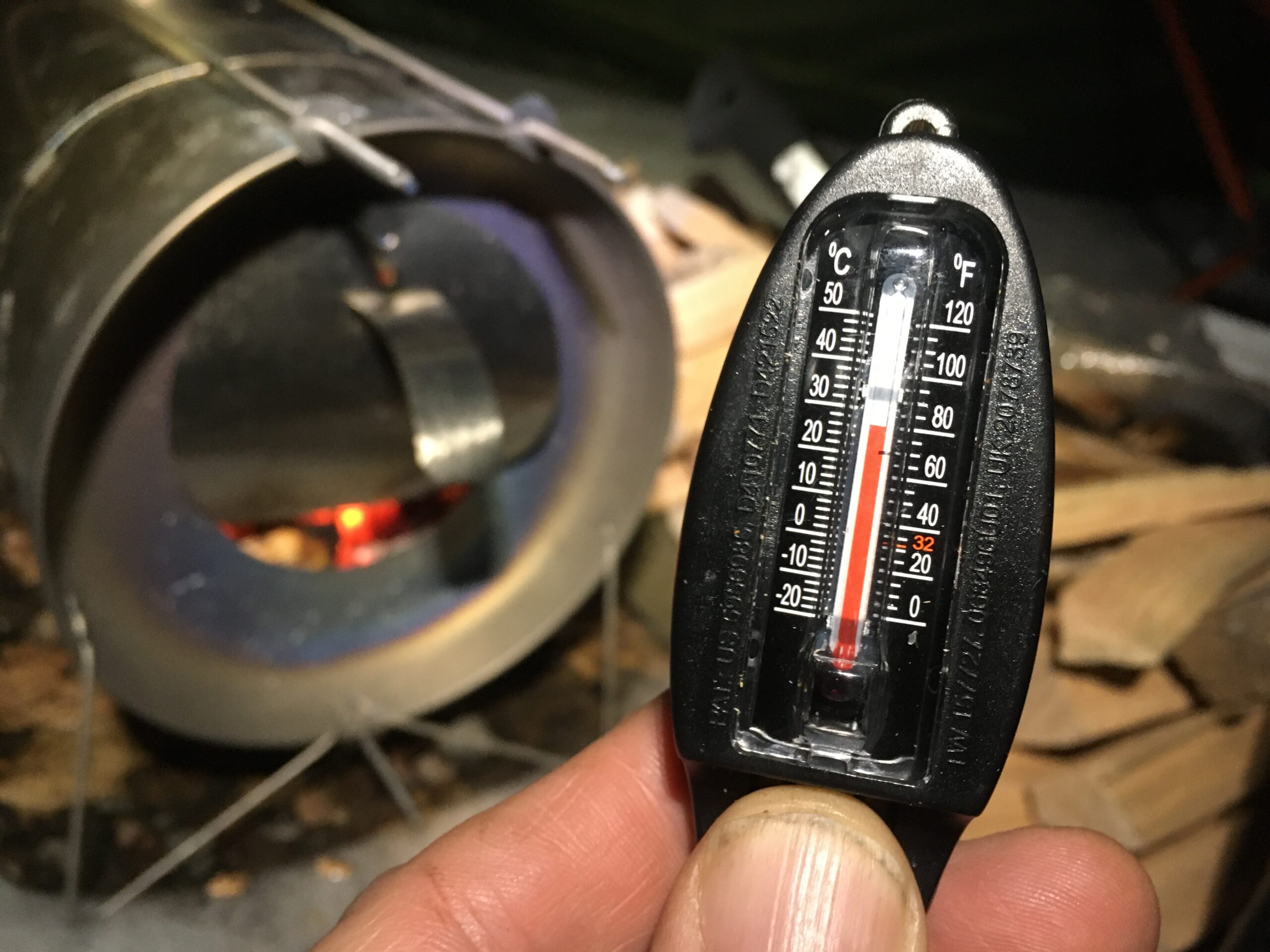
While the cold winter camping season may have left just before I got my new stove, I did give it a quick test fire outside my house the other morning when I woke up to 32°F temps and a dusting of snow on the ground. I may not need it camping until next winter, but I was curious to see how well it heated my hot tent compared to my old Titanium Goat cylinder-style stove.
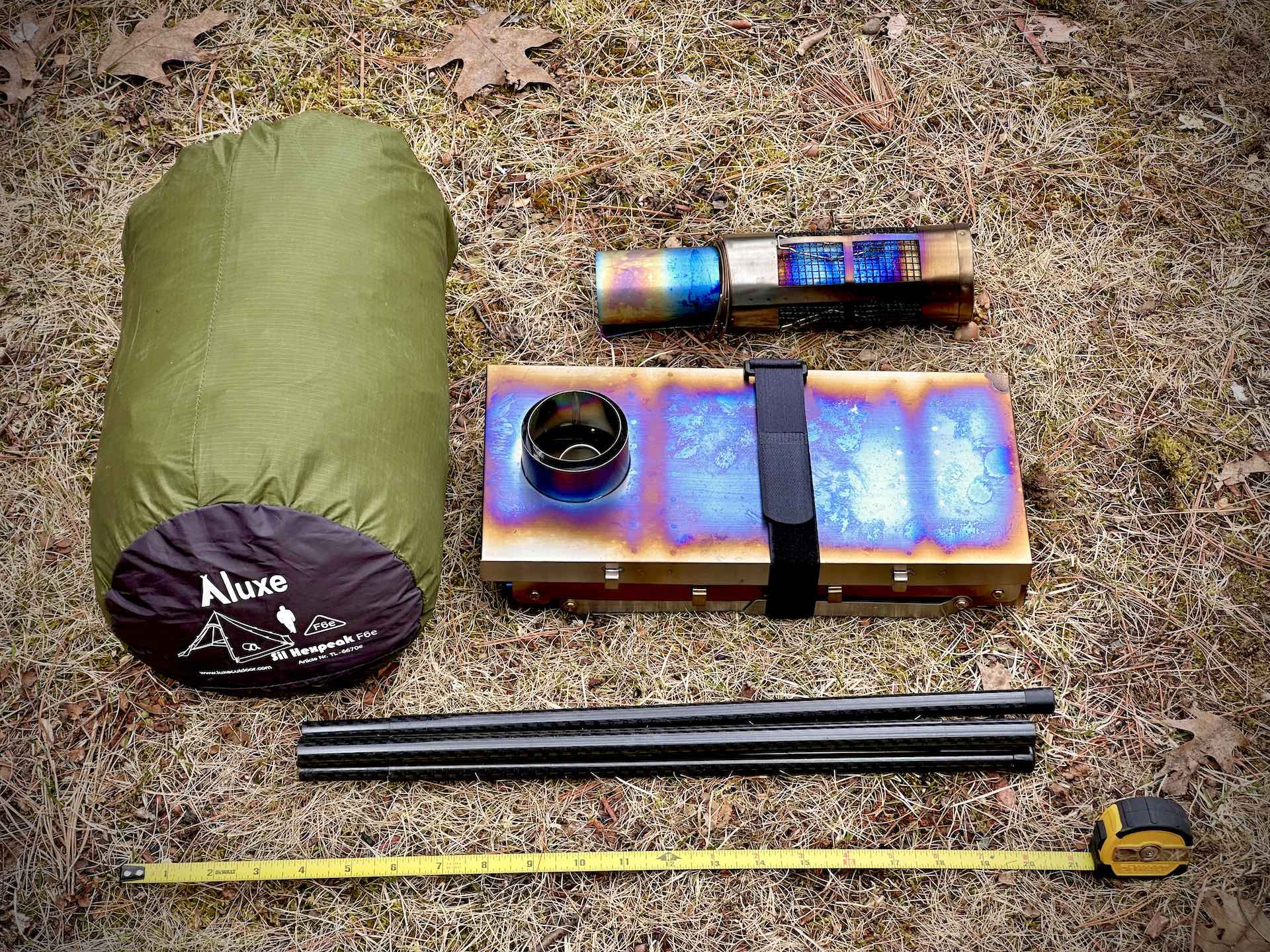
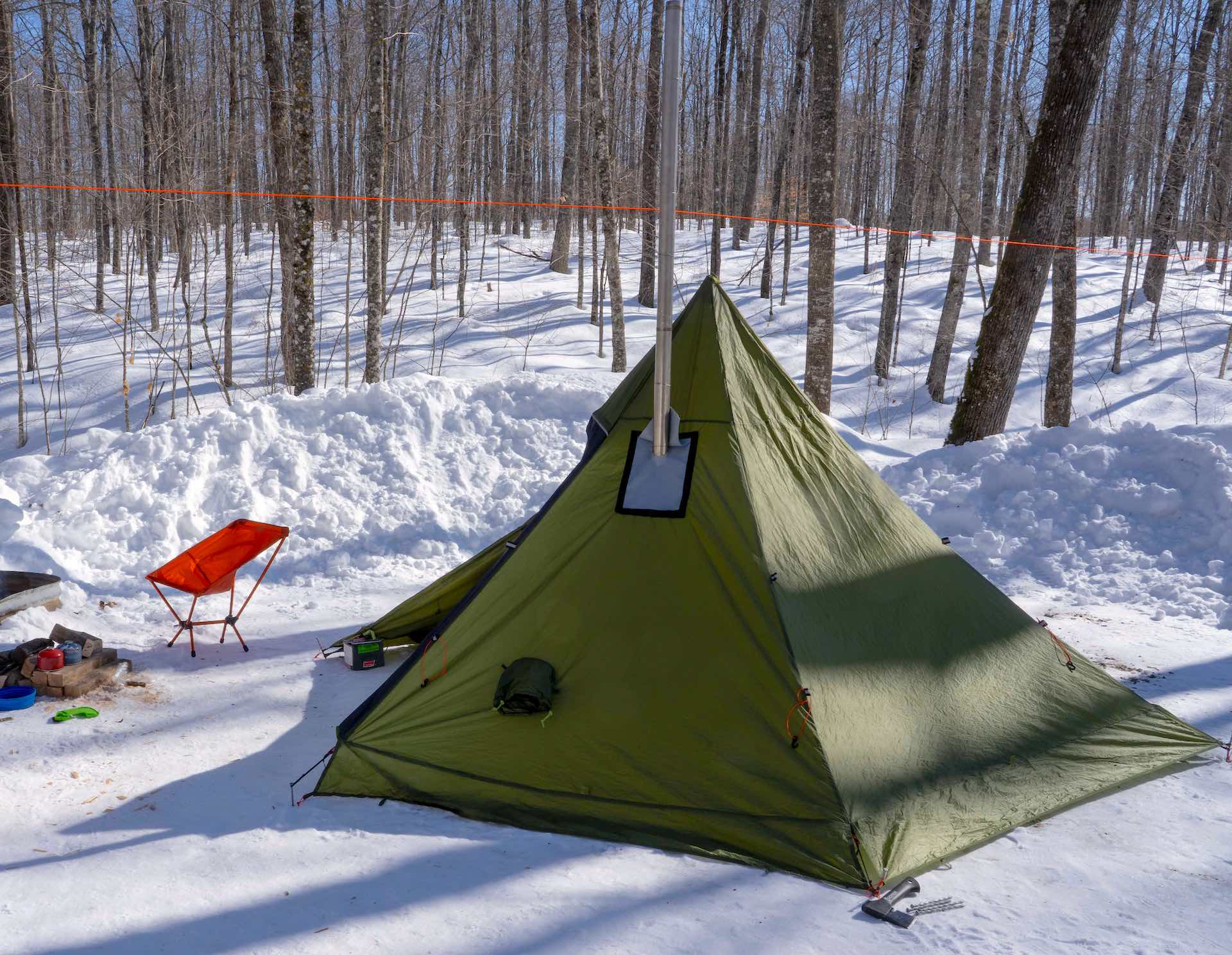
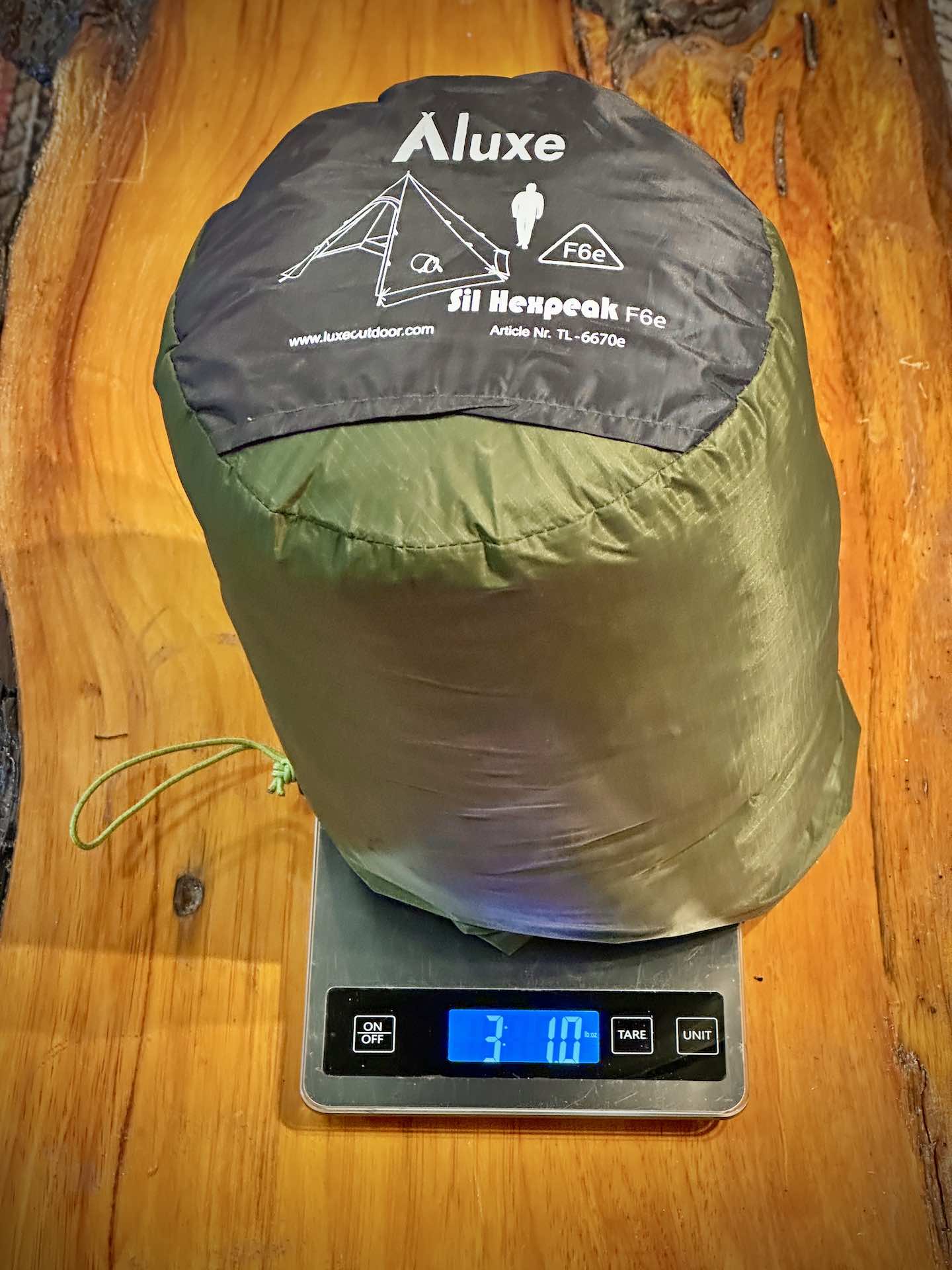
I have an old Luxe Outdoors six-sided, floorless, tipi-style hot tent. It only weighs 3 lbs 10 oz, and packs down almost as small as a modern Big Agnes Copper Spur UL2 tent. With a Ruta Locura carbon fiber pole and titanium stakes, there is hardly any penalty to bringing it along on a bike.
Like my Titanium Goat stove, these tents are no longer made. Some companies make similar products today. For instance, Lite Outdoors makes a very similar cylinder wood stove. And Seek Outside makes some very nice, similar tipi-style hot tents, made in Colorado. Their Cimaron is probably the closest to what I have.
If I kept my old titanium wood stove stoked with firewood, it could heat up the tent to 80°F, even when it was well below zero outside. The 10-inch pieces of firewood burn up quickly, but will get the stove red hot if I keep adding them. The small bed of coals is not enough to keep a person warm while sleeping, but it will dry out sweaty clothing and your sleeping bag.
Besides, sitting by a campfire is nice, but I find that the fireside of me is often too hot and the backside of me is cold. Sitting in an 80°F tent on a cold camping trip is a real luxury. Since there isn’t much weight or packing penalty to my hot tent or a titanium wood stove, and the prices are very reasonable for both, why suffer? My tent cost about $400 and my new stove was $315 after my initial purchase discount.
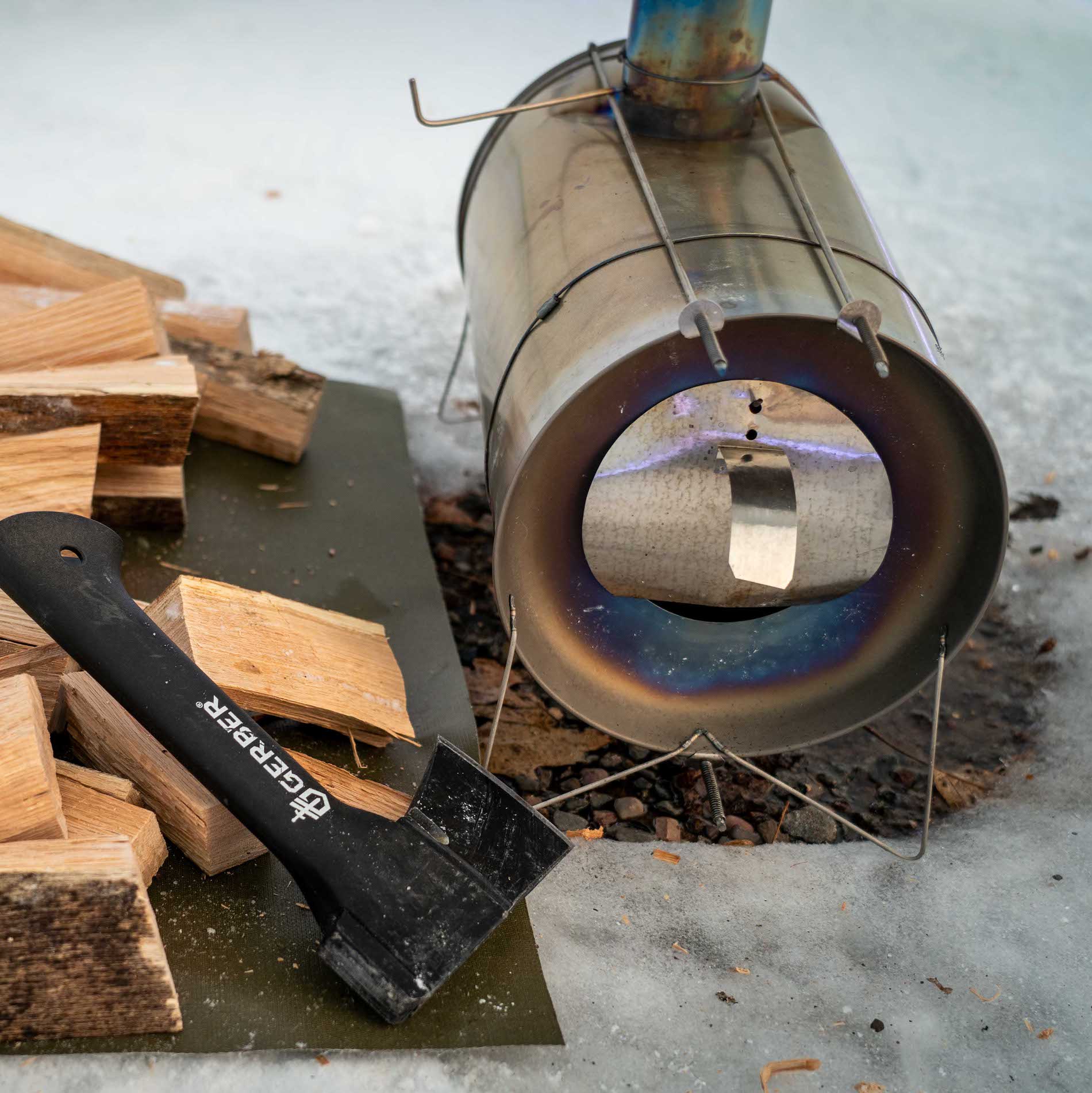
Because people sweat while they sleep, sleeping bags collect that moisture. This reduces the temperature rating for the bag and causes it to gain a lot of weight. If you are on a multi-day winter bikepacking trip, you either need to sleep in a vapor barrier or dry your bag out each day. I find that running the wood stove for a couple of hours before I go to sleep or in the morning when I wake up is enough to dry out my sleeping bag.
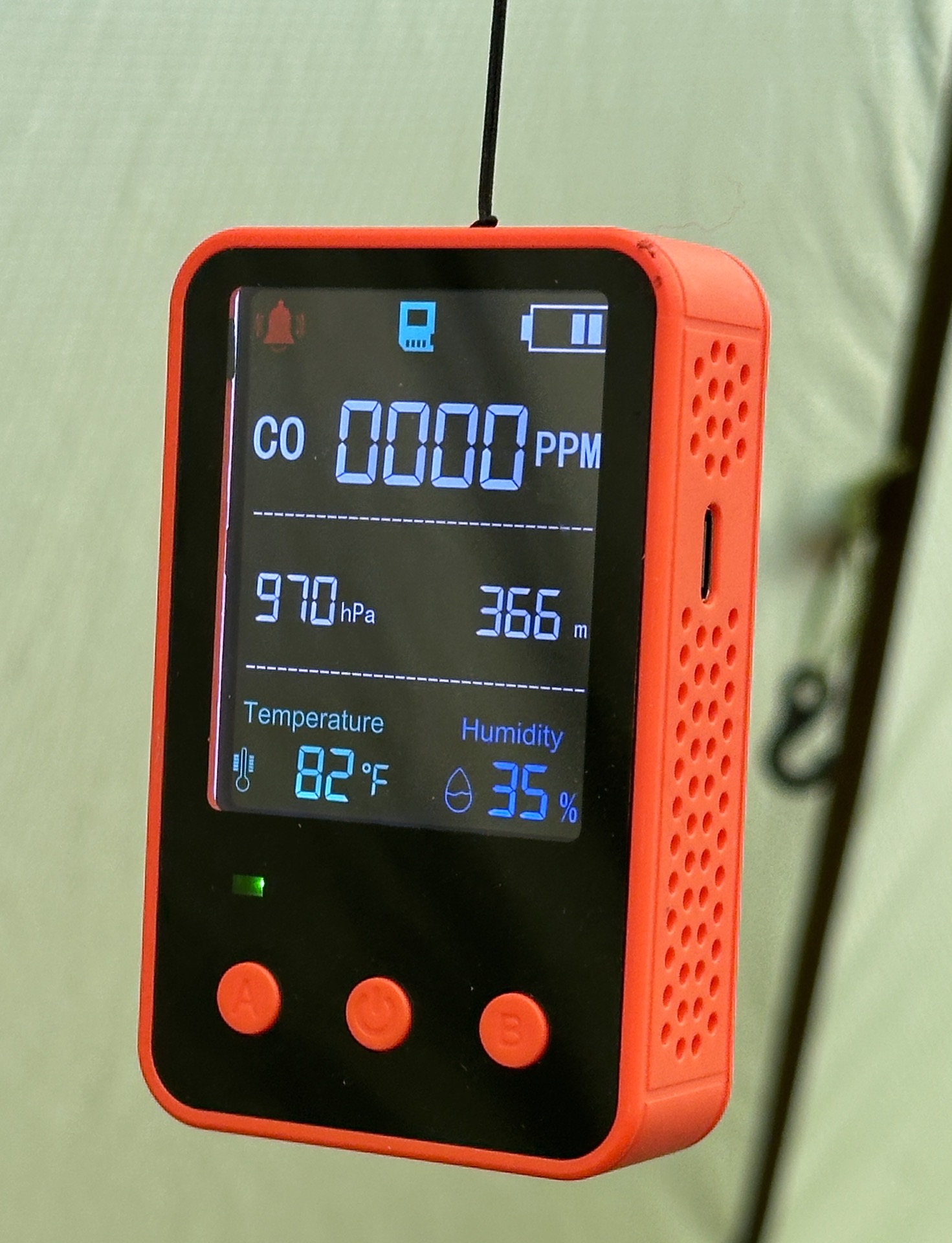
Without a truly cold night, this test is a bit of a frozen apples-to-frozen oranges comparison. When I started lighting the fire, the temperature was 33°F. I now hang a CO meter in the tent that also measures temperature and humidity when I run a wood stove. I was pleased to see that for my initial test, it only took 15 minutes to get the tent up to 80°F!
That is about how hot I try to make the tent when I am really winter camping to dry things out and warm up. But it usually takes 30-45 minutes to get things that warm when it is below zero outside. I would not normally bring a hot tent and stove when the forecast is for low temperatures hovering around 32°F.
So unless I get an unexpected invite to Alaska or the mountains, I will have to wait until next winter to do further testing. All things considered, I am pretty happy with this purchase. While the old cylinder stove worked well, it is much more finicky to set up as you can see in the unboxing video below. And getting the last one in the country before all the tariffs screw up prices and supply was big bonus.